
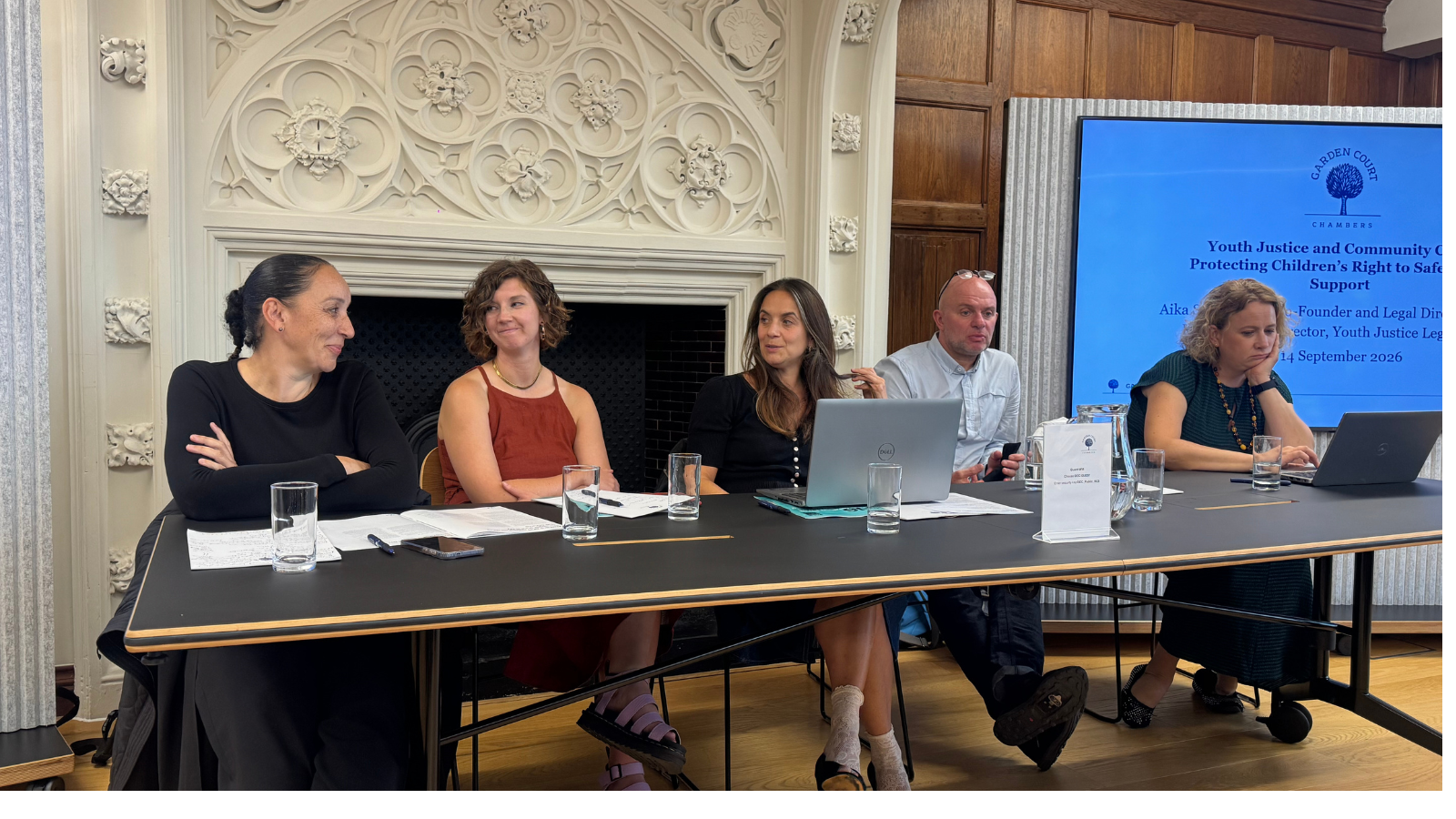
Earlier this month, we held a seminar at Garden Court Chambers on protecting children’s rights to safety and support. The event was funded by the Dawes Trust, who proudly support our work on contextual safeguarding.
We were delighted to have over 90 attendees in person, and a further 110 people joined us online.
One of the speakers was Dr Jenny Lloyd, Global Centre for Contextual Safeguarding. Here’s a rundown on what we learned from her keynote address:
Protecting children from harm outside the home
Since 2021, safeguarding guidance in England, Scotland and Wales has made reference to ‘extra-familial harm’. That means harm to children that takes place outside the home, which could be at school, online, or even in peer groups.
The guidance places a duty of care on social care agencies and professionals to safeguard children and young people from extra-familial harm. That could involve making a safety plan for the child, connecting them with a counsellor, or doing whatever is needed to protect their welfare.
Where things get complicated is when some children are viewed as “victims” while others are viewed as “perpetrators”. This is exactly what happened in Tom’s case.
Child Welfare Approach Vs Crime Prevention Approach
Tom*, aged 15, was arrested in Brighton for possession with intent to supply class A drugs. Social care notes for Tom suggested this was down to “poor decision-making” on Tom’s part, as there was no evidence that he was associated with a gang.
Tom might face serious consequences, including the possibility of custody, but the authorities did not believe this raised a safeguarding concern.
This happens because the system is flawed. It separates children into those who need support (social care), and those who are culpable (youth justice).
But that approach fails to consider the wider experience of a child who encounters the criminal justice system. What if that child was exploited? What if they’re a victim of neglect, abuse, or violence?
Real life will not always fit into these rigid boxes. That’s why we need to keep pushing for all children to be safeguarded from harm.
Safeguarding is Everyone’s Business
Contextual Safeguarding recognises that parents don’t have the capacity to fully protect their children beyond the front doorstep. To do that successfully, we need to bring all the different agencies outside the home together: schools, police, local authorities, child protection teams, etc.
When a partnership between these agencies is established, it’s much easier to identify when a child is at risk of harm – and if that harm might bring them into contact with the justice system.
How could we approach Tom’s case differently
In Tom’s case, professionals viewed his situation through a “perpetrator” lens, but they could have looked deeper and seen that he was at risk of significant harm.
If all the agencies around Tom looked at the context, it would have given them a fuller picture of his life, his needs, and what led to his arrest. That might have led them to investigate whether Tom was exploited, and to take action against those who were responsible.
At Just for Kids Law, we have plenty of experience fighting for the rights of children like Tom. As Chris Callendar (Head of Civil Litigation, JfKL) explains:
“There are legal remedies for flawed assessments and decision-making by social services. With legal representation and access to justice, Tom could have challenged these decisions and obtained services and support from the local authority.”
That could have led to a completely different outcome for Tom – the outcome he deserved. Because every child deserves to be safeguarded from harm.
Do you want to hear all the latest updates from Just for Kids Law? Sign up to our newsletter.
*Tom’s name has been changed to protect his identity. Further research on this topic can be found at Sage Journals.